

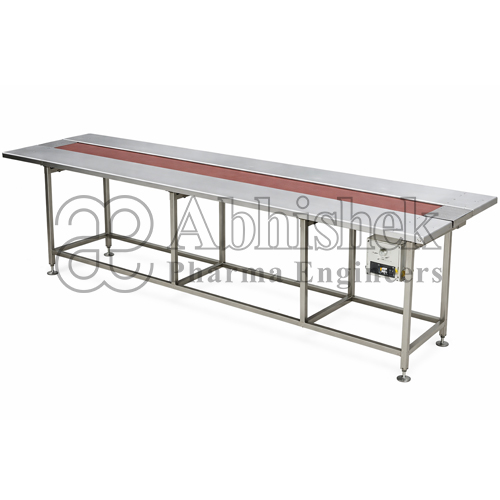
A Packing Conveyor is a specialized mechanical system used to move products, containers, or packages from one stage of production to another. Imagine it as a bridge that connects different “islands” in a factory. Without this bridge, workers would have to carry bottles or boxes by hand between the filling, capping, and labeling stations. The conveyor automates this movement, making sure everything flows in a straight, organized line without any interruptions.
As an experienced Packing Conveyor manufacturer, we know that a conveyor is more than just a moving belt. It is about “flow management.” If the conveyor moves too fast, products might crash into each other and break. If it moves too slowly, the machines at the end of the line will sit idle, wasting time and energy. A well-designed conveyor acts like a steady heartbeat for the factory, keeping a perfect rhythm so that every machine can do its job efficiently.
Reducing manual handling is one of the biggest benefits of installing a high-quality system. When products move automatically, there is less chance of contamination or accidental damage. For any business looking for a reliable Packing Conveyor supplier in Ahmedabad, the goal is to create a seamless workflow. By connecting the entire packaging process together, a conveyor transforms separate tasks into one single, high-speed operation that saves labor costs and increases daily production.
How a Packing Conveyor Operates: Step-by-Step
Understanding the logic of a conveyor helps operators keep the line running at peak performance:
- Product Entry: Vials, bottles, or boxes are placed onto the moving surface from a previous machine or a collection tray.
- Spacing and Speed: The conveyor uses a motor to move at a specific speed. The operator can speed it up or slow it down so that products arrive at the next machine exactly when they are needed.
- Stability and Alignment: Side guides (metal or plastic rails) keep the products in the center of the belt. This prevents them from falling off the edge or moving crookedly.
- Smooth Transfer: As the conveyor reaches another machine, it uses “dead plates” or small rollers to bridge the gap, ensuring the product doesn’t trip or shake during the hand-off.
- Discharge: Finally, the products reach the end of the line, where they are moved into boxes, inspection units, or large shipping cartons.
Key Technical Design Features
- Frame Structure: The entire system is built on a “C-channel” or “Square Pipe” frame made of stainless steel. This makes the conveyor strong enough to handle heavy weights without bending.
- Belt Material Selection: We choose belt materials that are “food-grade” or “anti-static” depending on what you are moving. This prevents the belt from reacting with your product.
- Speed Control: Most conveyors use a Variable Frequency Drive (VFD). This is a simple knob or digital screen that lets you change the belt speed instantly.
- Product Stability: We use adjustable side guides. You can move the rails in or out to fit different bottle sizes in just seconds.
- Vibration Control: The motors are mounted on vibration-dampening pads to keep the machine quiet and prevent glass bottles from rattling.
Types of Packing Conveyors We Can Supply
Flat Belt Packing Conveyor
This is the most common type, using a continuous loop of fabric, rubber, or PVC.
- Movement: The belt is pulled over a flat metal bed.
- Best for: Lightweight items, small boxes, and stable bottles. It provides the smoothest surface for delicate products.
Modular Belt Packing Conveyor
Instead of one long piece, this belt is made of many small plastic pieces linked together like a chain.
- Movement: It is very strong and can easily move around corners or up hills.
- Best for: Heavy loads or environments where the belt might get wet. It is very easy to repair because you can replace just one small link if it breaks.
Roller Packing Conveyor
This system uses a series of metal tubes (rollers) placed side-by-side.
- Movement: The rollers spin to push the product forward.
- Best for: Large, heavy boxes or crates that have a flat bottom. It is often used at the very end of a packing line.
Slat Chain Packing Conveyor
This uses a chain made of hard plastic or stainless steel slats.
- Movement: It is extremely sturdy and moves in a very straight line.
- Best for: Heavy glass bottles or metal cans. It is the standard choice for “high-speed” liquid filling lines in India.
Packing Conveyor Technical Specifications
Conveyor dimensions, belt type, speed, frame construction and automation can be customized according to container type, production capacity and packaging line requirements.
| Feature | Specification Category |
| Conveyor Dimensions | Custom Lengths (1 meter to 20+ meters) |
| Load Capacity | Light, Medium, or Heavy Duty |
| Speed Range | 5 to 20 meters per minute (Adjustable) |
| Surface Material | PVC, PU, Stainless Steel, or Plastic Links |
| Frame Material | Stainless Steel 304 or 316 |
| Automation Level | Independent or Integrated with PLC |
| Power Usage | Low (Energy-efficient motors) |
| Maintenance | Low (Self-lubricating bearings) |
How to Select the Right Packing Conveyor
Selecting the right packing conveyor depends on the type of product, production speed, available floor space, and the machines connected within the packaging line. A suitable conveyor should support smooth product movement, proper alignment, and consistent transfer between filling, capping, labeling, inspection, and final packing stages.
Before finalising a conveyor, consider the following requirements:
- Bottle, vial, carton, or container dimensions
- Product weight and shape
- Required conveyor length and width
- Production speed and output capacity
- Belt or slat chain configuration
- Stainless steel grade such as SS304 or SS316
- Side guide and alignment requirements
- Conveyor working height
- Existing filling, capping, labeling, or inspection machines
- Available production floor space
- Electrical controls and automation requirements
- Future packaging line expansion
For pharmaceutical and industrial manufacturers in Ahmedabad, Gujarat, choosing a conveyor that matches the complete packaging line can help reduce manual handling, improve workflow, and minimise unnecessary product stoppages.
Abhishek Pharma Engineers is a Packing Conveyor Manufacturer and Supplier in Ahmedabad, Gujarat, offering conveyor configurations based on product size, line speed, machine layout, and application requirements.
If you are planning a new packaging line or upgrading an existing setup, share your product dimensions, required conveyor size, production capacity, and current machine layout with our team.
Quality, Safety & Hygiene
In a professional packing environment, hygiene is a top priority. Our conveyors follow GMP (Good Manufacturing Practice) standards. This means they are designed with “open” frames that don’t trap dust or spilled liquids.
- Clean Movement: The belts are easy to wash and don’t shed fibers.
- Reduced Damage: By removing the need for workers to carry items, you reduce the chance of dropped or broken products.
- Operator Safety: All moving gears and pulleys are covered by safety guards to protect the people working nearby.
Industry Applications
Our conveyors are essential in these environments:
- Pharmaceutical Lines: Moving vials and tablet bottles between clean rooms.
- Food & Beverage: Transporting jars of sauce, juice bottles, or snack pouches.
- Cosmetics: Moving fragile perfume glass and lotion pumps.
- Chemicals: Safely transporting heavy jugs of cleaning agents or pesticides.
Integration with the Packaging Line
A Packing Conveyor acts as the glue that holds the line together. It connects:
- Filling Machines: Receives the filled containers.
- Capping & Labeling: Delivers products for sealing and identification.
- Inspection Units: Moves items past cameras or weight-checkers.
- Cartoning: Takes the final products to be boxed.
Maintenance and Ease of Operation
We build our conveyors to be “operator-friendly” with very low maintenance needs:
- Daily Cleaning: The smooth stainless steel surfaces can be wiped down in minutes.
- Belt Inspection: The belt tension can be adjusted with a single tool if it ever becomes loose.
- Simple Controls: With a simple “Start/Stop” button and a speed knob, any worker can learn to operate the system in a few minutes.
Packing Conveyor Manufacturer in Ahmedabad and Gujarat
Abhishek Pharma Engineers manufactures and supplies packing conveyors from Ahmedabad, Gujarat for pharmaceutical and industrial packaging applications. Our Ahmedabad location allows us to support businesses across major manufacturing areas of Gujarat with machine selection, customization, installation guidance and after sales requirements.
We serve customers across Ahmedabad, Sanand, Changodar, Gandhinagar, Vadodara, Ankleshwar, Bharuch, Surat, Vapi, Rajkot and other industrial locations in Gujarat.
For a new packaging line or integration with existing machinery, share your product dimensions, conveyor requirements and production capacity with our team.
Your website lists the company address in Ahmedabad, Gujarat, so this location connection is supported rather than artificially created for SEO.
FAQs for Packing Conveyor
What is a Packing Conveyor?
A Packing Conveyor is an industrial conveyor system used to move bottles, cartons, containers, or packed products smoothly from one workstation to another during filling, capping, labeling, inspection, or final packing operations. It helps improve workflow and production efficiency.
Can a packing conveyor connect with filling and labeling machines?
Yes. A conveyor can be configured to transfer products between filling, capping, labeling, inspection and final packaging equipment according to line layout and production speed.
Can the conveyor size be customized?
Yes. Conveyor length, width, height, belt or chain configuration, side guides and other specifications can be selected according to the application and available production space.
Which details are required for a packing conveyor quotation?
Buyers should provide product dimensions, product weight, conveyor length, required speed, production capacity, available floor space and details of machines that will connect with the conveyor.
Where can I buy a packing conveyor in Ahmedabad?
Abhishek Pharma Engineers manufactures and supplies packing conveyors from Ahmedabad, Gujarat for pharmaceutical and other packaging applications.
Do you supply packing conveyors across Gujarat?
Yes. Abhishek Pharma Engineers serves customers across Ahmedabad and major industrial locations in Gujarat based on project and delivery requirements.
Can you customize a packing conveyor for an existing packaging line?
Yes. The conveyor configuration can be evaluated according to existing filling, capping, labeling or inspection equipment, product dimensions and required line speed.