
How to Select Pharma Machinery Based on Production Requirements
The pharmaceutical industry depends on accuracy, hygiene, consistency, and controlled production. Behind every tablet, capsule, syrup, injection, or liquid medicine is a carefully planned manufacturing process supported by reliable equipment. Choosing the right Pharma machinery manufacturer is therefore an important decision for pharmaceutical companies that want stable production, better product quality, and long-term operational efficiency.
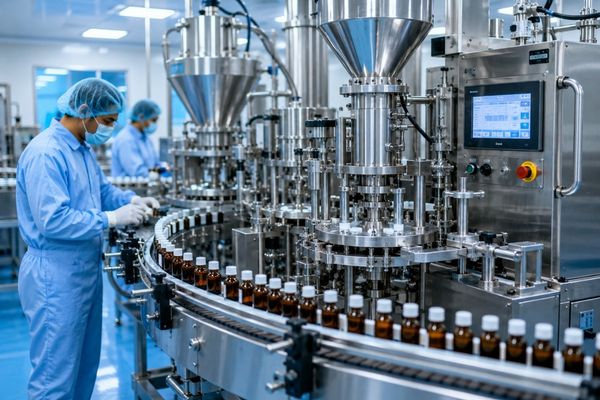
Modern pharmaceutical plants need more than basic machines. They require equipment designed for easy cleaning, accurate filling, controlled processing, safe product handling, and smooth integration with production lines. Whether a company is setting up a new facility or upgrading an existing unit, selecting suitable pharmaceutical machinery can improve productivity while reducing waste, downtime, and manual errors.
Why Pharma Machinery Is Important for Modern Manufacturing
Pharmaceutical production involves several critical stages, including material preparation, mixing, filling, sealing, inspection, labeling, and packaging. Each stage must be completed under controlled conditions.
A dependable Pharma machinery manufacturer develops equipment that helps manufacturers maintain repeatable production results. Proper machinery can also reduce unnecessary product contact, improve batch consistency, and simplify cleaning between production cycles.
Modern machines commonly support features such as:
- PLC based operating systems
- HMI touchscreen controls
- Automatic product counting
- Accurate filling mechanisms
- Stainless steel contact parts
- Emergency safety controls
- Adjustable production speed
- Automatic rejection systems
- Batch monitoring
- Easy changeover between products
These features make pharmaceutical manufacturing faster, safer, and easier to manage.
Types of Machines Used in Pharmaceutical Plants
Different pharmaceutical products require different manufacturing and packaging equipment. A complete production plant may include several individual machines connected together.
Common pharmaceutical machinery includes:
| Machine Type | Common Application |
|---|---|
| Bottle Washing Machine | Cleaning bottles before filling |
| Liquid Filling Machine | Filling syrups and liquid medicines |
| Vial Filling Machine | Filling injectable products |
| Ampoule Filling Machine | Filling and sealing ampoules |
| Capping Machine | Applying and tightening caps |
| Labeling Machine | Applying labels on containers |
| Inspection Conveyor | Visual inspection of filled products |
| Tablet Machine | Tablet manufacturing |
| Capsule Filling Machine | Filling powders into capsules |
| Packaging Machine | Final pharmaceutical packaging |
How to Choose a Pharma Machinery Manufacturer
Selecting equipment only by machine price can create problems later. Pharmaceutical machinery is normally used for many years, so buyers should consider technical capability, machine construction, service support, and future production requirements.
A professional Pharma machinery manufacturer should first understand the customer’s application before suggesting a machine.
Important points to evaluate include:
Machine Construction
Pharmaceutical machinery should be designed for clean production environments. Stainless steel is commonly used because it provides durability and allows easier cleaning.
Product contact parts should also be designed to reduce contamination risks and make maintenance convenient.
Production Capacity
Machine capacity should match current production requirements while allowing some room for future growth.
Buying a very small machine can create production limitations later, while an oversized machine may increase unnecessary investment.
Filling and Processing Accuracy
Accuracy becomes especially important when dealing with pharmaceutical liquids, powders, tablets, or injectable products.
A properly configured machine can reduce product wastage and maintain consistent quantities across batches.
Automation Level
Pharmaceutical manufacturers can choose between manual, semi automatic, and fully automatic equipment.
Small production units may start with semi automatic machines, while medium and large manufacturers often prefer automatic lines to improve speed and reduce manual handling.
Benefits of Automatic Pharmaceutical Machinery
Automation is becoming increasingly important in pharmaceutical production facilities.
Automatic machines help different production stages operate continuously with limited manual intervention. For example, an automatic bottle line may connect bottle washing, filling, capping, labeling, and inspection systems.
Major benefits include:
- Higher production speed
- Better filling consistency
- Reduced manual handling
- Lower chances of human error
- Improved production planning
- Better use of manpower
- Reduced product wastage
- Easier batch management
- Consistent packaging appearance
Automation can also help companies expand production without constantly increasing manual labour.
Pharma Machinery Manufacturer for Different Applications
A capable Pharma machinery manufacturer can supply equipment for several pharmaceutical manufacturing segments.
These may include:
- Liquid pharmaceutical plants
- Injectable medicine production
- Tablet manufacturing
- Capsule manufacturing
- Syrup production
- Nutraceutical manufacturing
- Ayurvedic product manufacturing
- Veterinary medicine production
- Cosmetic manufacturing
- Healthcare product packaging
Machines can often be customized according to bottle dimensions, vial sizes, production speeds, filling volumes, factory layouts, and automation requirements.
Importance of Easy Cleaning and Maintenance
Machine productivity depends heavily on proper cleaning and preventive maintenance.
Pharmaceutical machines should be designed so operators can access important components without unnecessary difficulty. Easy access helps reduce cleaning time and allows technicians to identify worn or damaged components earlier.
A regular maintenance plan should include:
- Cleaning after production
- Checking moving components
- Inspecting electrical connections
- Verifying filling accuracy
- Checking sensors
- Inspecting belts and conveyors
- Lubricating required parts
- Reviewing safety systems
Preventive maintenance can reduce unexpected machine stoppages and increase equipment life.
Custom Pharmaceutical Machinery for Growing Production Units
Not every pharmaceutical company follows the same production process. Container size, formulation type, output target, available floor space, and packaging method can vary widely.
Custom machinery can solve these challenges.
A pharmaceutical machine may be modified for specific bottle sizes, additional filling heads, conveyor arrangements, special control systems, or integration with existing production equipment.
Before purchasing customized equipment, manufacturers should provide clear information regarding product characteristics, required output, container specifications, and future expansion plans.
Choosing Machinery for Long Term Production
Pharmaceutical manufacturers should consider the total value of equipment rather than only the initial purchase cost.
A machine that provides consistent output, easy maintenance, readily available spare parts, and proper technical support can offer better long-term value.
Before finalizing a supplier, buyers should discuss:
- Machine specifications
- Production capacity
- Product compatibility
- Change parts
- Electrical requirements
- Utility requirements
- Installation support
- Operator training
- Spare part availability
- After sales service
A detailed discussion before manufacturing reduces misunderstandings and helps ensure that the supplied equipment matches actual production requirements.
Conclusion
Choosing the right Pharma machinery manufacturer is a major step toward building an efficient and dependable pharmaceutical production facility. Good machinery supports accurate processing, controlled manufacturing, consistent output, easier maintenance, and smoother production flow.
Whether the requirement is for filling, sealing, washing, inspection, labeling, or complete production lines, businesses should focus on machine quality, automation, customization, service support, and future scalability. A well-planned machinery investment can help pharmaceutical manufacturers improve productivity while preparing their facilities for long-term growth.
Frequently Asked Questions
A Pharma machinery manufacturer provides equipment used for pharmaceutical processing, filling, washing, sealing, inspection, labeling, and packaging operations.
Common machines include bottle washing machines, liquid filling machines, vial filling machines, ampoule filling machines, capping machines, labeling machines, inspection conveyors, tablet machines, and packaging equipment.
Consider your product type, required production capacity, container size, automation level, machine material, accuracy, maintenance requirements, and future expansion plans.
Automatic pharmaceutical machinery performs production operations with limited manual intervention using conveyors, sensors, PLC controls, filling systems, and automatic handling mechanisms.
Yes. Machines can often be customized according to production capacity, filling volume, container dimensions, automation requirements, factory layout, and product characteristics.
Stainless steel is durable, corrosion resistant, easy to clean, and suitable for hygienic manufacturing environments.
Check machine capacity, construction quality, operating system, accuracy, safety features, spare part availability, maintenance requirements, installation support, and after sales service.
Modern machinery can increase production speed, maintain consistency, reduce manual handling, minimize product wastage, and simplify production management.